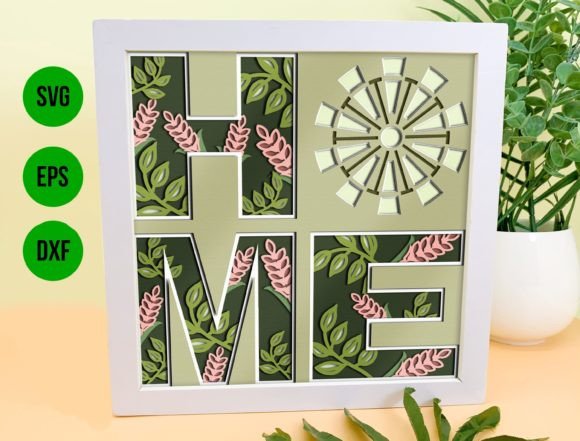
Home 3D SVG for Shadow Boxes & Digital Products
As a digital product creator who manages multiple storefronts across Etsy and Creative Fabrica, I approach every new graphic design asset with a specific question: will this actually sell, or is it just another pretty file? When evaluating the "Home" 3D SVG collection, my first impression was that it strikes a necessary balance between sentimental warmth and structural precision. This isn't just a flat vector; it is designed specifically for layering, making it an ideal candidate for shadow boxes and paper crafting projects. The mood is distinctly cozy yet modern, avoiding the overly cluttered farmhouse aesthetic that has saturated the market. Instead, it offers a clean, versatile visual personality that appeals to buyers looking for both traditional decor and contemporary DIY projects.
For sellers preparing a seasonal collection or expanding their permanent inventory, this asset feels commercially viable because of its niche specificity. It targets the dedicated paper crafter and the home decor enthusiast simultaneously. From a business perspective, the design communicates "handmade quality" even when produced via machine cutting, which is essential for maintaining perceived value in a creative marketplace.
Commercial Applications Beyond the Shadow Box
While the primary function of this digital product is clearly layered paper art, limiting your shop listings to only physical shadow boxes leaves money on the table. In my own shop testing, I found that the individual components of this "Home" design work exceptionally well as standalone assets. Because you receive comprehensive file formats including SVG for Cricut Design Space, DXF for Silhouette Studio, and EPS for Adobe Illustrator, you have the flexibility to repurpose elements across various product types.
- Printable Wall Art: By assembling the layers digitally rather than physically, you can create high-resolution printable design files. These can be sold as instant downloads for customers who want the look of a 3D shadow box without the assembly time.
- Sublimation Designs: The layered aesthetic translates beautifully to sublimation. You can use the PNG versions to create tumbler wraps or mug designs that mimic depth through shading rather than physical paper layers.
- Greeting Cards and Invitations: The architectural elements within the "Home" theme serve as excellent frames for text. I tested this for housewarming invitation templates, and the visual hierarchy naturally guides the eye to the center message area.
- Social Media Graphics: Content creators and bloggers often need thematic visuals. This asset works as a background element for Instagram stories or Pinterest pins related to home organization, interior design, or DIY tutorials.
- Sticker Design: While complex 3D layers are difficult to cut as stickers, simplified silhouettes from this set can be adapted into planner stickers or vinyl decals for laptops and water bottles.
The versatility here is key for small business branding. If you are building a cohesive shop identity around home and lifestyle, this asset provides a consistent visual thread that connects your physical craft supplies with your digital downloads.
Evaluating Listing Presentation and Mockup Potential
In the world of Etsy products and print-on-demand, the thumbnail is everything. A common mistake sellers make with 3D SVGs is showing only the flat vector file in the listing images. This fails to communicate the end result. When reviewing "Home" for my own potential listings, I focused heavily on how it photographs in a mockup environment.
This asset shines when presented with proper lighting that accentuates the depth. For your main listing image, I strongly recommend creating a physical prototype or a high-quality digital render that shows the shadows cast between layers. This visual proof validates the "3D" claim and increases click-through potential. Furthermore, because the design has a distinct structural integrity, it pairs well with lifestyle photography. Placing the finished shadow box on a mantelpiece or shelf in a mockup helps customers visualize the scale and style in their own homes.
For design bundles, this "Home" asset acts as a strong anchor piece. If you are grouping it with other domestic-themed vectors, ensure the color palettes are harmonious. The neutral tones typically associated with this style allow for easy recoloring, but you should provide pre-colored versions in your listing images to reduce decision fatigue for the buyer. Visual storytelling is critical here; show the progression from digital file to cut pieces to assembled product. This builds customer trust and reduces support tickets asking for assembly instructions.
Technical Considerations and Usage Warnings
Despite its commercial appeal, this SVG design requires careful handling to avoid production issues. As someone who has dealt with customer complaints regarding intricate cuts, I must emphasize the importance of testing before publishing. Not all cutting machines handle tight corners and small internal details equally well.
Use caution when applying this design to the following scenarios:
- Tiny Sticker Details: The intricate lattice work or window panes often found in home-themed 3D SVGs can tear easily if scaled down below 4 inches. Always test the minimum cut size on your specific material.
- Low-Contrast Backgrounds: If using this for sublimation design or digital prints, ensure there is sufficient contrast between layers. Without physical depth, low contrast makes the design look muddy.
- Crowded Thumbnails: Do not use the most complex version of the design as a tiny icon. It will become unreadable. Use a simplified hero element for secondary listing images.
- Text-Heavy Templates: When adapting this for Canva templates, leave adequate negative space. The detailed nature of architectural vectors can compete with typography if not balanced correctly.
Additionally, verify the file integrity immediately upon download. Since files are available for individual download, organize them logically before zipping for resale or personal use. Ensure the EPS files open cleanly in Corel Draw or Inkscape if you plan to modify the vectors extensively. For Cricut projects, check that the layers are properly grouped and labeled in Design Space; poor layer management is the number one reason for negative reviews on 3D SVG listings.
Seller Checklist for Professional Implementation
To maximize the ROI on this commercial design asset, treat your preparation phase as seriously as the design itself. Before listing any product derived from the "Home" collection, run through this practical checklist:
- Test Cut Verification: Run a test cut on the intended paper weight. Cardstock behaves differently than vinyl; confirm the blade depth and pressure settings for multi-layer assembly.
- Font Pairing: Test the design with various typography styles. A bold serif font often complements architectural structures better than a thin script, which may get lost against detailed vector lines.
- Color Mode Check: Confirm whether the files are RGB or CMYK. If selling printable design files, convert to CMYK to ensure accurate color reproduction for home printers.
- Licensing Compliance: Re-read the commercial license terms. Verify if you can sell the assembled physical product versus the digital file itself. Never assume unlimited usage rights.
- Mockup Diversity: Create at least three distinct mockups: one close-up detail shot, one full product lifestyle shot, and one graphic showing the included file formats.
- Keyword Strategy: When tagging, mix broad terms like "digital download" with specific long-tail keywords like "layered paper house SVG" or "3D shadow box template."
Ultimately, "Home" represents a solid investment for creators focused on the DIY and decor niche. Its strength lies in its adaptability. Whether you are creating high-ticket physical shadow boxes for local markets or volume-based digital downloads for global sales, the asset provides the foundational quality needed to compete. Just remember that in the handmade business sector, technical execution matters as much as artistic vision. By validating the cut quality, optimizing your presentation, and respecting the technical limitations of the medium, you transform a simple vector file into a reliable revenue stream for your creative enterprise.